Chairside Vitamin D Testing & Oral Health
At One To One Dental Clinic, we integrate clinical biochemistry directly into modern dental surgery. Using the Botiss® botissCARE Rapi-D test, we assess your biological healing capacity, implant osseointegration potential, and periodontal resilience in minutes.

Why Vitamin D is Essential for Dental Implants & Bone
Vitamin D is not merely a vitamin; it is a vital secosteroid hormone that directly regulates intestinal calcium and phosphate absorption, osteoblastic bone deposition, and systemic immune modulation.
In implantology and periodontics, serum 25-hydroxyvitamin D [25(OH)D] is the biological linchpin of surgical success:
- Osseointegration: New bone formation around titanium implants requires optimal active Vitamin D to stimulate osteocalcin and matrix mineralization.
- Bone Graft Consolidation: Patients with serum levels <50 nmol/L experience up to a 3-fold higher incidence of early implant failure and impaired graft consolidation.
- Periodontal Defense: Vitamin D induces the expression of cathelicidin and defensins—natural antimicrobial peptides that inhibit subgingival pathogens.

The UK Vitamin D Deficiency Crisis
Due to the UK’s geographic latitude, limited UVB radiation between October and April, and indoor lifestyles, hypovitaminosis D is an unrecognized national epidemic.
Suboptimal Levels
Half of all UK adults have sub-optimal serum Vitamin D levels (<50 nmol/L) throughout the year, impairing immune defense and bone density.
Winter Deficiency
During winter and spring months, adult deficiency rates surge to 57%, significantly elevating surgical failure risks for unsupplemented implant patients.
Severe Deficiency (<25 nmol/L)
Approximately 17% of adults suffer from severe deficiency, where invasive bone grafting or implant placement is clinically contraindicated without prior calibration.
Clinical Reference Ranges & Action Protocol
How we interpret your Botiss® botissCARE Rapi-D test chairside, and the precise therapeutic actions taken before proceeding with surgical care.
| Serum 25(OH)D Level | Clinical Classification | Biological Status | Harley Street Surgical Action Protocol |
|---|---|---|---|
| < 25 nmol/L | Deficient | High risk of early implant failure; compromised osteogenesis; poor wound healing. | High Surgical Risk. Elective implant placement delayed; urgent high-dose clinical supplementation (40,000 IU weekly for 6 weeks) prescribed followed by re-testing. |
| 25 – 50 nmol/L | Insufficient | Sub-optimal bone healing; heightened inflammatory cytokine production; slower soft-tissue closure. | Daily high-grade clinical supplementation (3,000–4,000 IU D3 + K2) initiated 4 weeks prior to bone grafting or implant surgery. |
| 50 – 75 nmol/L | Adequate | Baseline metabolic sufficiency for general health, but sub-maximal for heavy surgical demands. | Maintenance supplementation (1,000–2,000 IU daily) recommended to protect stability during post-surgical remodeling. |
| > 75 nmol/L | Optimum | Maximal osteocalcin activation, robust osseointegration capacity, and peak periodontal immunocompetence. | Green Light for Immediate Surgery. Full-arch immediate loading, Same-Day Teeth, and complex sinus elevation proceed with maximal biological predictability. |
Systemic Health Benefits Beyond Dentistry
Optimizing your Vitamin D status creates profound health dividends across every organ system in your body.
1. Bone & Muscle Strength
Increases calcium bioavailability, preventing bone demineralisation, osteoporosis, osteomalacia, and proximal muscle weakness.
2. Immune Resistance
Directly upregulates macrophage activity and antimicrobial peptides, significantly lowering susceptibility to viral respiratory tract infections.
3. Mood & Mental Vitality
Supports dopamine and serotonin synthesis in neural pathways, actively protecting against Seasonal Affective Disorder (SAD) and cognitive fatigue.
4. Metabolic & Cellular Health
Enhances pancreatic beta-cell sensitivity, stabilizing blood glucose regulation and reducing cardiovascular inflammation markers.
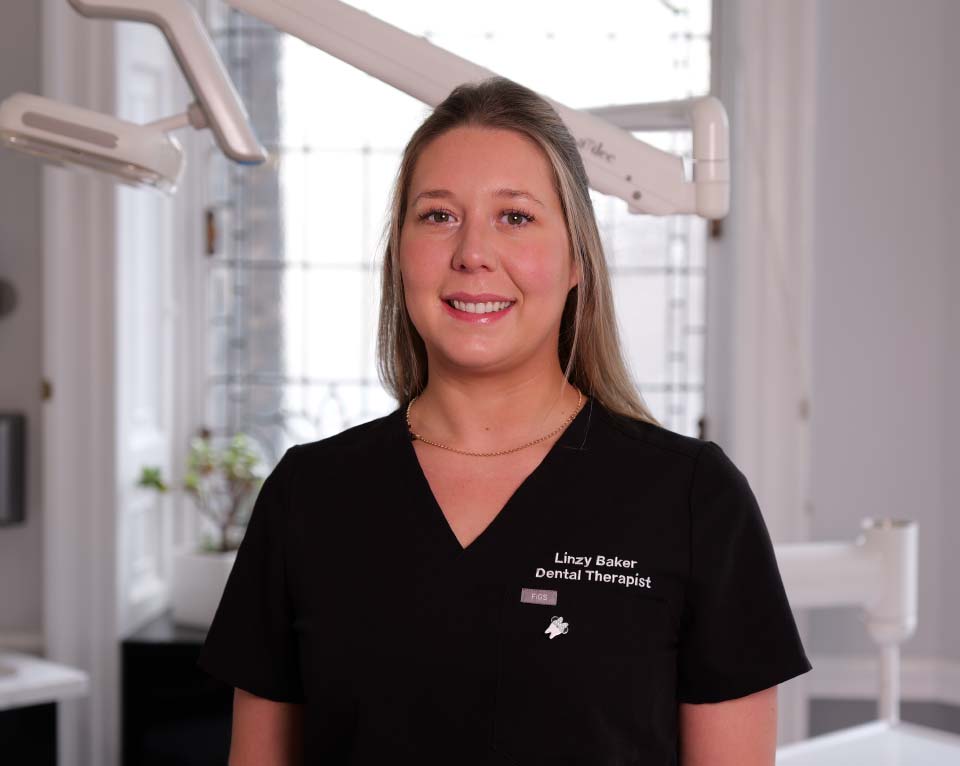
Chairside Screening by Linzy Baker
Chairside Vitamin D diagnostic testing is conducted during your preventative hygiene appointment or pre-surgical assessment by our Lead Dental Hygiene Therapist, Linzy Baker.
The procedure requires just a single minute, utilizing a tiny finger-prick lancet. The blood droplet is analyzed digitally by our chairside photometric reader, giving you a precise quantitative reading (nmol/L) before you leave the surgery.
Personalised Prescription Support:
If your levels fall below the 75 nmol/L surgical benchmark, Linzy and Dr Khan-Osborne calculate your exact loading dosage, recommend pharmaceutical-grade Vitamin D3 + K2 drops, and arrange a follow-up re-test to verify optimal osseointegration readiness.